
When police use force against a suspect, they too must follow the law. If the use of force itself was unjustified, or the level that was utilized was excessive, you may be able to file a lawsuit.
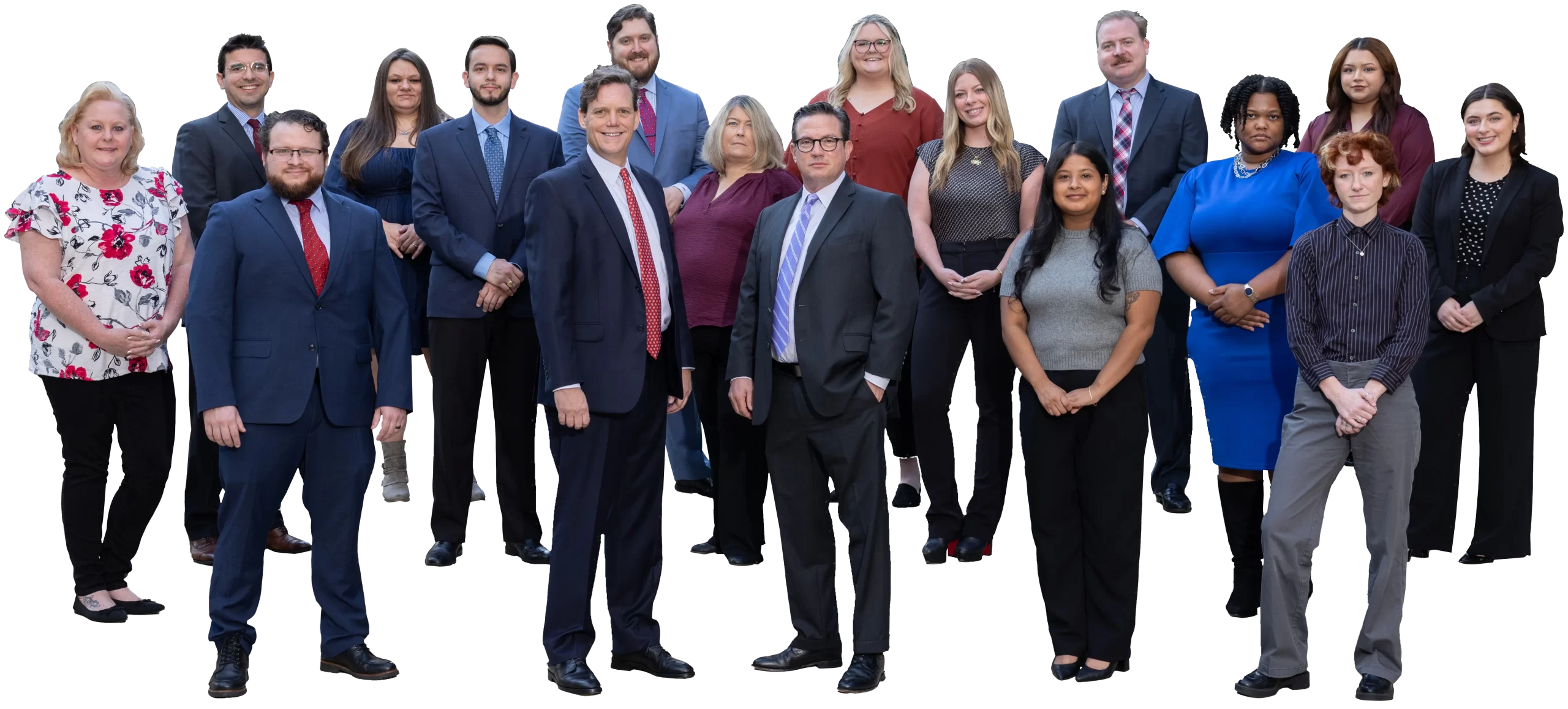
At Hall & Lampros, LLP, we have successfully handled numerous police brutality cases on behalf of clients who have entrusted their matter to us. Attorney Adam Mills and the rest of our team passionately fight for justice when you have been victimized by excessive force. No matter who the defendant is in your case, you can expect us to passionately stand up for your civil rights and hold the wrongdoer accountable.
Hall & Lampros is located at 300 Galleria Pkwy Ste 300, Atlanta, GA 30339, in the Atlanta Galleria Office Park. Schedule a free initial consultation by calling us today at (404) 876-8100.
Contact Hall & Lampros, LLP
free case evaluation
Recent Google Review
Clients appreciate the level of customer service and the advocacy that we provide. Client Joey G. writes: “They made sure to fully explain each detail of my legal matter which made me feel very comfortable along the way. In the end I got exactly what I wanted and most importantly didn’t waste any time. Would give them 10 stars if I could.”
What Is Considered Police Excessive Force?
Many people think of excessive force as involving police shootings only. While that is certainly covered under the definition, excessive force includes many other instances in which police wrongfully use unjustifiable and unwarranted types of brutality against suspects, including the following:
- Beating a person who is already restrained
- Executing a precision immobilization technique during a police chase (Hall & Lampros obtained a $1 million settlement when a victim was injured during this maneuver)
- Using a baton, flashlight, or other weapon unnecessarily
- Using a Taser on a person who is compliant or poses no immediate threat
An excessive force case is different from police misconduct actions that allege false arrests or evidence or witness tampering. Here, your claim relates back to what happened during the encounter with the police itself, rather than what may have led to it or what transpired after it.
What Determines Whether Excessive Force Was Used?
Whether the use of force is excessive depends on the facts and circumstances of the individual situation. Force which may be justified in one situation can be considered excessive in another. In a lawsuit, a court may consider the following factors in determining whether the force that was used was excessive:
- The severity of the alleged offense: If a violent crime is suspected, police may be justified in using more force to apprehend the suspect.
- The threat level of the suspect: Police may be more justified in using force if the suspect presents an imminent threat to them or the public.
- The suspect’s level of compliance: If a suspect is actively resisting arrest, police may use a greater level of force.
- Alternatives to force: Police may have had an opportunity to de-escalate the situation, whether it is through negotiation or issuing a warning prior to using force.
As noted above, a common example of excessive force is when a police officer opens fire on a suspect. In some cases, the suspect may have already surrendered, or they could be attempting to flee with their back turned to the officer. In that event, the police officer may have had other alternatives to shooting.
The Legal Grounds for an Excessive Force Lawsuit
Like any other type of police misconduct case, an excessive force lawsuit will typically proceed under 42 U.S.C. § 1983. When police are using force on a suspect, they are acting pursuant to their authority as a law enforcement officer. Here, the police officer has deprived the victim of their civil rights under the color of law. Typically, the civil right is your constitutional right under the Fourth Amendment to be free from unreasonable seizures.
How to Prove Excessive Force in a Lawsuit
To prove excessive force, you must show that the police officer’s actions were objectively unreasonable under the circumstances. A court will go back to the actual situation that the police officer observed and faced before they decided to use force and the level of force they utilized in the situation. Something that may seem clearly unreasonable after the fact may be considered reasonable based on what the officer saw and perceived.
Your excessive force attorney in Atlanta may use the following to prove your case:
- Body camera footage: A recording from the officer’s body camera is perhaps the most valuable source of evidence that you have, and you can obtain it through a subpoena.
- Witness testimony: People who saw the incident can testify about what transpired, including whether the victim may have objectively posed a threat and whether they were subdued at the time that force was used.
- Dashcam footage: Excessive force is often used during traffic stops, and the victim’s and the police officer’s vehicle may have had a dash cam that recorded what happened.
- Expert testimony: An expert in law enforcement practices can give their opinion about whether the use of force was justified in the first place, and whether the level of it was reasonable.
Why Hire an Atlanta Police Brutality Lawyer at Hall & Lampros
At Hall & Lampros, we have a track record of success in excessive force cases. In April 2022, we obtained a $4.8 million settlement with the State of Georgia on behalf of Betty Lewis, the widow of Julian E. Lewis, a Black man who was fatally shot by a Georgia State Patrol Trooper in 2020. We have represented victims in numerous cases that have resulted in seven-figure settlements. Your fight for justice is our mission, and we are unafraid to stand up to the authorities on behalf of our clients.
Fight for Justice with the Help of an Atlanta Excessive Force Law Firm
If you or a loved one has been the victim of excessive police force, Hall & Lampros will leave no stone unturned in your pursuit of justice. Take the first step towards obtaining accountability in the form of financial compensation by scheduling a free initial consultation with an Atlanta excessive police force lawyer. You can message us online or call us today at (404) 876-8100 to speak to an attorney.

















 ES
ES