
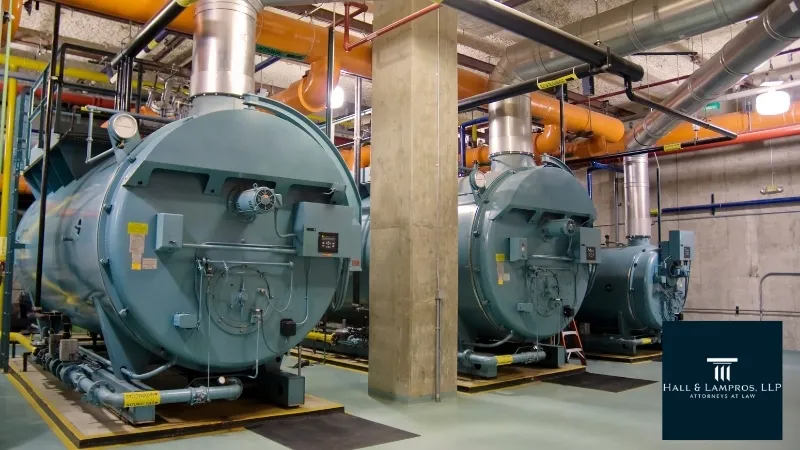
A workplace explosion can turn your world upside down in seconds. You’re dealing with injuries, medical bills piling up, and you can’t work. And when it happens at a plant or facility in Georgia, you might be wondering: When does a boiler explosion or plant incident in Georgia mean a third-party lawsuit applies? Workers’ comp might cover some basics, but it rarely covers everything (and the process feels designed to drag out).
Here’s the thing. If someone other than your employer caused the incident – a maintenance contractor, equipment manufacturer, or negligent property owner – you may have legal options beyond workers’ compensation. Hall & Lampros, LLP has handled these cases before. We’ll walk you through what actually matters and what steps come next.
Key Takeaways
- Third-party lawsuits allow injured workers to pursue compensation beyond workers’ comp limits when someone other than their employer caused the accident
- Georgia’s 50% bar rule means you cannot recover damages if you’re 50% or more at fault for the incident
- Equipment manufacturers, contractors, and property owners can all be held liable in boiler explosion cases depending on their negligence
- You typically have two years from the date of injury to file a third-party lawsuit in Georgia
- Preserving evidence immediately after an incident is absolutely critical to building a strong case
Understanding Third-Party Lawsuits in Industrial Accidents
Here’s what happens when you get hurt at work in Georgia. Workers’ compensation kicks in automatically, covers your medical bills, gives you some wage replacement. But – and this is huge – it doesn’t cover everything. Pain and suffering? Nope. Full wages? Not even close. Emotional distress? Forget about it.
That’s where third-party lawsuits come in.
When someone other than your employer causes your injury, you can go after them directly. Equipment manufacturer sold a faulty boiler? Sue them. Outside contractor ignored safety protocols? They’re fair game. Property owner failed to maintain equipment? You’ve got options.
The thing is, Georgia operates under what’s called the 50% bar rule. If you’re 50% or more responsible for causing your own injuries, you can’t recover anything in a third-party lawsuit. Nothing. Zero. So establishing who’s really at fault becomes absolutely critical to your case.
Workers’ compensation is no-fault insurance. Third-party claims? You need to prove negligence.
Identifying Liable Parties in a Boiler Explosion
Equipment manufacturers top the list. Defective pressure valves, faulty gauges, inadequate safety mechanisms – these design flaws or manufacturing defects create strict liability in many cases, which (here’s the beauty of it) means you don’t even have to prove they were negligent, just that the product was defective and caused your injury.
Contractors and subcontractors who performed maintenance or installation work can be liable too. Did they cut corners on inspections? Install components incorrectly? Ignore OSHA regulations? Then they’re potentially on the hook. Property owners have duties too under Georgia law – they must maintain safe premises and ensure equipment meets safety standards.
Now here’s where it gets tricky.
Multiple parties often share responsibility in plant incidents, and Georgia’s comparative negligence rules mean the pie gets divided up based on fault percentages. You might be going after the boiler manufacturer for 60% of damages, the maintenance contractor for 30%, and the property owner for 10%. Your attorney needs to identify every potentially liable party because you want the deepest pockets possible (and frankly, because it’s just fair to hold everyone accountable who contributed to your injuries).
Steps to Take Post-Incident: Building a Case
Document everything. Seriously, everything.
Photograph the equipment, the scene, your injuries, the surrounding area. Get witness names and contact information before people disappear or memories fade. File an incident report with your employer immediately – Georgia law requires prompt notification, and delays can jeopardize your workers’ comp claim, let alone any third-party case you might build later.
Here’s what I see happen too often: people assume someone else is handling the documentation, and crucial evidence gets lost, cleaned up, or destroyed before anyone preserves it properly. Equipment gets repaired or replaced. Witnesses move on to other jobs. The accident scene gets sanitized. And then six months later when you’re trying to build a case, there’s nothing left to work with except your word against theirs, which is a terrible position to be in when you’re trying to prove negligence.
Preservation of evidence matters more than almost anything else in these cases because boiler explosions destroy the very evidence you need to prove what happened, so quick action becomes absolutely essential, and that means getting an attorney involved early who can send preservation letters, hire investigators, and document everything before it vanishes.
Call a lawyer fast.
Not next week. Not after you’ve healed up. Now. Because Georgia’s statute of limitations doesn’t care about your recovery timeline, and evidence preservation doesn’t wait for anyone.
How Georgia’s Statute of Limitations Affects Your Claim
Two years.
That’s what you’ve got in Georgia to file a personal injury lawsuit from the date of the accident. Miss that deadline and your case dies, doesn’t matter how strong it was or how badly you were hurt. The courts will dismiss it without even looking at the merits. Gone.
But here’s something people don’t always understand – the statute of limitations for third-party claims runs separately from your workers’ compensation claim. You might still be receiving workers’ comp benefits two, three, five years after an accident, but your window for filing that third-party lawsuit closed after two years. I’ve seen people miss out on hundreds of thousands of dollars in additional compensation because they didn’t realize these were separate tracks with separate deadlines.
There are some exceptions, though they’re narrow. The “discovery rule” might apply if you couldn’t have reasonably known about the defect or negligence that caused your injury. And if the liable party fraudulently concealed their wrongdoing, that can extend the deadline. But don’t count on exceptions to save you – they’re hard to prove and rarely apply to boiler explosion cases where the incident and injuries are immediately obvious.
The Role of Safety Regulations and Compliance
Industrial facilities in Georgia must comply with both federal OSHA standards and state regulations. Boiler operations fall under specific codes addressing inspection schedules, pressure limits, safety valve requirements, operator training, and maintenance protocols. When companies ignore these rules, they create liability for themselves.
Safety audits catch problems before they explode (literally). Regular inspections identify corroded components, pressure buildup risks, valve failures waiting to happen. But audits only work if someone actually implements the recommendations, and this is where negligence often creeps in – companies get the audit report, see the list of needed repairs, and decide those repairs can wait because money’s tight or downtime’s expensive or whatever excuse sounds good at the moment, and then boom, someone gets hurt and suddenly those penny-pinching decisions look pretty indefensible in court.
Contractors have specific responsibilities under Georgia law too. They can’t just show up, do half the job, and walk away. They owe duties to ensure their work meets code, doesn’t create hazards, and gets inspected properly. Violation of safety protocols creates evidence of negligence, making your third-party case significantly stronger. The National Institute for Occupational Safety and Health publishes guidelines that often become the standard of care in these cases.
Documentation of safety violations becomes gold in litigation.
Exploring Compensation Beyond Workers’ Compensation
Workers’ comp covers medical expenses and partial wage replacement. Period. Third-party lawsuits open up everything else.
Pain and suffering damages compensate you for physical pain, emotional trauma, loss of enjoyment of life – all the intangible ways the injury damaged you beyond just medical bills and lost paychecks. In Georgia, there’s no cap on these damages in most cases. Juries decide what’s fair based on the severity of your injuries and how they’ve impacted your life.
Lost earning capacity goes beyond just the wages you’ve already missed – it compensates you for future income you’ll never earn because the injury left you disabled or limited in what work you can do, and in catastrophic boiler explosion cases where someone suffers severe burns, loses limbs, or sustains permanent disabilities, these numbers can reach into millions of dollars because you’re talking about compensating someone for decades of lost earnings and career opportunities.
Emotional distress is separate from pain and suffering. PTSD from the explosion, anxiety about returning to industrial work, depression from permanent disfigurement. These are real damages that deserve real compensation.
And then there’s punitive damages. Georgia allows these when the defendant’s conduct was willful, wanton, or showed a conscious indifference to consequences. Company knew the boiler was dangerous but kept running it anyway? That’s punitive damage territory. These aren’t about compensating you – they’re about punishing the wrongdoer and deterring future misconduct.
Navigating Subrogation and Liens in Georgia Claims
Now it gets complicated.
When you receive workers’ comp benefits and then win a third-party settlement, your workers’ comp carrier has subrogation rights – meaning they get paid back for what they spent on your medical care and wage replacement. Georgia law gives them a lien on your recovery. Same goes for health insurance companies if they paid any medical bills related to the injury.
But you don’t have to pay back every penny. Your attorney can often negotiate these liens down, especially when the settlement doesn’t fully compensate you for all your damages. Georgia subrogation law does not require lienholders to share proportionally in the costs of obtaining the recovery, including attorney fees.
Here’s what this means practically: you win $500,000 in a third-party case, workers’ comp paid out $100,000 in benefits, your attorney fees are 33%. The workers’ comp carrier doesn’t automatically reduce their lien by their share of the attorney fees and costs. These calculations matter tremendously to how much money you actually take home.
Financial responsibility proof becomes relevant if you’re trying to collect from an individual defendant rather than an insured company or manufacturer. Georgia requires drivers to carry insurance, but no similar requirement exists for property owners or many contractors, so verifying someone can actually pay a judgment before you spend years litigating becomes an important strategic consideration.
Your attorney handles all this. (Thank goodness, because it’s tedious and technical and requires understanding Georgia’s insurance and lien laws inside and out.) The key is maximizing your net recovery after all liens, fees, and costs get paid – that’s the number that actually matters to you and your family’s financial future.
FAQ: Your Boiler Explosion Questions Answered
How does the 50% bar rule in Georgia affect accident claims?
If you’re found 50% or more at fault for your own injuries, you won’t recover a dime in Georgia. It’s a modified comparative negligence state, which means even if you’re partially responsible, you can still collect damages – but only if you bear less than 50% of the blame. The amount you recover gets reduced by your percentage of fault, so if you’re 20% responsible, your award drops by that much.
What should you do immediately after a boiler explosion?
Get medical attention first, obviously. Then report the incident to your employer right away. Take photos of everything if you’re physically able – the equipment, the scene, your injuries. Don’t let anyone clean up before it’s documented. Write down what happened while it’s fresh in your mind, and grab contact info from any witnesses who saw it go down.
Can defective equipment manufacturers be held liable in Georgia?
Absolutely. If a manufacturer made faulty equipment or didn’t provide proper warnings, they’re fair game for a third-party lawsuit. Same goes for equipment installers or maintenance companies who screwed up their work. You’ll need to prove the defect directly caused the explosion, which usually requires expert testimony and solid documentation.
What compensation types can you claim beyond workers’ compensation?
Pain and suffering, emotional distress, lost future earning capacity, punitive damages if someone was grossly negligent. Workers’ comp only covers medical bills and partial lost wages – it’s pretty limited. A third-party claim can get you compensated for the real impact on your life, not just the bare minimum.
How does the statute of limitations impact your case?
You’ve got two years from the date of injury in Georgia for most personal injury cases. Miss that deadline and your case is toast, doesn’t matter how strong it is. Some exceptions exist, but don’t count on them. Clock’s ticking from day one.
Why is preserving evidence crucial in third-party lawsuits?
Because memories fade and companies clean up fast. You need physical proof of what happened and why. Without it, you’re just telling a story with no backup, and that won’t cut it in court when the other side’s lawyers show up with their version of events.
What role do safety audits play in preventing industrial accidents?
They catch problems before they explode, literally. Regular audits identify equipment failures, safety violations, and procedural gaps that lead to disasters. When companies skip audits or ignore findings, that becomes powerful evidence of negligence if someone gets hurt. OSHA compliance resources outline required inspection standards.
How are punitive damages awarded in Georgia?
Not easily, that’s for sure. You need to prove the defendant acted with actual malice, fraud, or willful misconduct – just being careless won’t do it. Georgia caps punitive damages at $250,000 in most cases, though there are exceptions for product liability and specific intentional conduct. They’re meant to punish really bad behavior, not compensate you.
What responsibilities do contractors have under Georgia safety laws?
Contractors must follow OSHA regulations, maintain safe work environments, properly train workers, and ensure equipment meets safety standards. They’re liable if their negligence or shortcuts cause injuries. Can’t just blame the property owner or equipment manufacturer if they failed to do their job right.
How does subrogation impact your compensation settlement?
Depends on who paid your bills. If your workers’ comp insurance or health insurance covered medical costs, they’ll want their money back from your third-party settlement through subrogation. You might negotiate those liens down, but you’ll definitely need to deal with them before keeping your full settlement amount.
Hall & Lampros, LLP: Your Georgia Plant Incident Law Firm
Third-party claims in industrial accidents aren’t something you want to figure out while you’re still recovering. Time matters here – evidence gets cleaned up, witnesses move on, and defendants start building their defense the day after your injury. We’ve handled these cases long enough to know that boiler explosions and plant incidents usually involve multiple liable parties beyond just your employer. Equipment manufacturers, maintenance contractors, safety inspectors. And the workers’ comp settlement you’re offered? That’s just the beginning of what you might be owed. Contact our firm today – we’ll review your case and tell you straight whether a third-party lawsuit makes sense for your situation.



















 ES
ES