
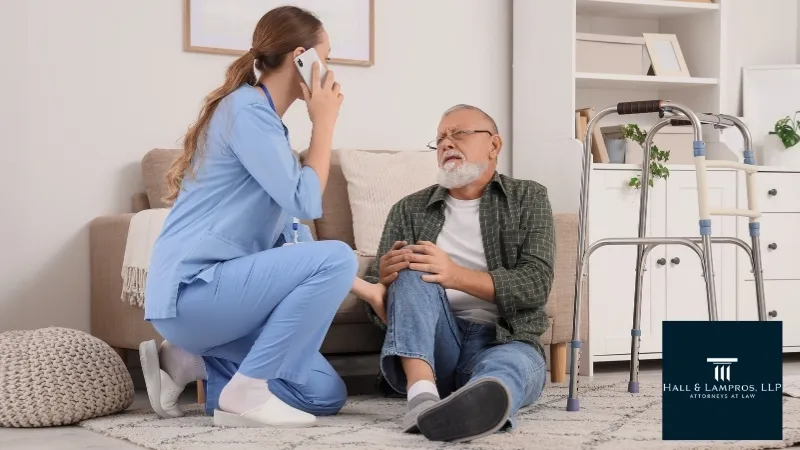
When your loved one falls in a nursing home, you’re told it was an accident. Just one of those things that happens with elderly residents.
But what if it wasn’t?
Families across Atlanta are asking when nursing home fall injuries cross the line from accident to neglect. And the distinctions matter. A lot. Because nursing homes have specific legal duties to prevent foreseeable falls, and they don’t always meet them (even when they insist everything was done correctly).
Here’s the thing: you’re not being paranoid if something feels off about the explanation you received.
Hall & Lampros, LLP helps families understand what actually happened and what their options are. Let’s walk through the warning signs, what legally separates neglect from an unavoidable accident, and the specific steps you can take right now to protect your family member.
Key Takeaways
- Falls in nursing homes become neglect when facilities fail to implement proper safety measures, conduct risk assessments, or maintain adequate staffing levels
- Georgia law (O.C.G.A. § 51-1-27) holds nursing homes liable for injuries caused by their negligence or failure to meet care standards
- Warning signs of neglect include unexplained injuries, repeated falls, lack of medical documentation, and behavioral changes in residents
- Families have multiple reporting options including the Georgia Long-Term Care Ombudsman Program and the Georgia Department of Community Health
- Understanding the two-year statute of limitations for personal injury claims is critical for protecting your legal rights after a fall incident
Understanding Nursing Home Negligence vs. Accidents in Georgia
Here’s what happens when your loved one falls in a nursing home. The facility calls. They say it was “just an accident.” Sometimes that’s true. But sometimes? It’s neglect disguised as bad luck.
The thing is, Georgia law draws a clear line between the two. O.C.G.A. § 51-1-27 requires nursing homes to exercise “ordinary care” – that means they need to do what any reasonable facility would do to keep residents safe. When they don’t? That’s negligence.
Negligence happens when:
- Staff ignores known fall risks
- The facility fails to create or follow care plans
- Equipment like bed rails or call buttons aren’t working (and nobody fixes them)
- Residents don’t get help with mobility even when their charts say they need it
An unavoidable accident is something else entirely. Maybe your loved one has excellent care, proper supervision, all safety measures in place, and still falls because of an unexpected medical event. That’s different.
But I’ll tell you what happens time and again – facilities jump to call everything an “accident” when families start asking questions. Don’t let them shut down the conversation that easily. The Georgia Department of Community Health sets clear standards these facilities must follow, and you have every right to verify they’re being met.
Signs of Neglect: Identifying a Fall as a Symptom
Unexplained bruises. Fractures that don’t match the story you’re being told. Multiple falls in a short period.
These aren’t just red flags – they’re alarm bells.
I’ve sat with families who believed their loved one was “just clumsy” or “getting older,” and while aging does increase fall risk, that doesn’t excuse a facility’s failure to adapt their care accordingly. When you visit, really look at your family member. Research on elder abuse shows that physical injuries are often just the visible tip of systemic neglect.
Notice if they seem afraid of certain staff members or suddenly anxious when you mention going home. Behavioral changes matter. Withdrawal, depression, fear of speaking up – these can indicate they’re not receiving proper care or worse, facing retaliation for complaining about unsafe conditions.
Document everything. Take photos of injuries (with permission, of course). Write down dates, times, which staff members were on duty. Ask to see the incident report every single time. If the facility “doesn’t have one” or keeps making excuses? That’s a sign right there.
The environment tells a story too. Wet floors without warning signs. Call buttons out of reach. Poor lighting in hallways. These aren’t minor oversights – they’re neglect waiting to cause the next fall.
Key Legal Rights and Resources for Families in Atlanta
Now here’s where it gets interesting.
Your loved one has rights. Actual legal rights that Georgia protects, not just suggestions nursing homes can ignore when it’s inconvenient. Every resident has the right to be free from neglect and abuse, the right to appropriate medical care, and the right to have complaints heard without fear of retaliation.
The Georgia Long-Term Care Ombudsman Program exists specifically to advocate for residents. They’re independent, they know the system inside and out, and they can investigate facilities when families suspect something’s wrong. This isn’t going behind anyone’s back – this is using the exact system Georgia created to protect vulnerable residents.
Here’s the process: Contact the Ombudsman. They’ll visit the facility, interview your loved one privately, review records, and work to resolve issues. They can also help you understand when it’s time to escalate to formal complaints with the Georgia Department of Community Health, which licenses and inspects nursing homes.
And look – I know some people worry about making waves or getting their family member in trouble with the facility. But facilities that retaliate? That’s another violation. You’re protected when you speak up. Your loved one is protected. The law is on your side here.
Legal redress means you can seek compensation for injuries caused by neglect. Medical bills, pain and suffering, sometimes even punitive damages when the neglect is particularly egregious. But you can’t get any of that if you don’t first establish that what happened wasn’t just an unfortunate accident.
Addressing Systemic Care Failures in Nursing Homes
Understaffing.
That’s usually the root cause when you dig deep enough into why falls keep happening at a particular facility, and I get a little frustrated when facilities blame “budget constraints” while their corporate parents report record profits, but that’s a conversation for another day – what matters for your family is recognizing that one overworked CNA trying to care for twenty residents simply cannot provide adequate supervision no matter how dedicated they are.
Systemic failures create the conditions where neglect thrives. When facilities operate with skeleton crews, staff can’t respond to call buttons quickly, residents wait too long for bathroom assistance (which is when many falls happen), and proper care plans become suggestions rather than requirements because nobody has time to actually follow them.
Communication breakdowns compound everything – day shift doesn’t tell night shift about a resident’s new mobility issues, critical information doesn’t make it into charts, family concerns get lost in administrative shuffle. The Eldercare Locator provides resources for understanding how these systemic issues impact care quality and what adequate staffing actually looks like.
Warning signs of systemic problems:
- High staff turnover (residents never see the same faces)
- Residents left in soiled clothes or bedding
- Unanswered call buttons
- Missed medications or meals
- General chaos or lack of organization during visits
Here’s the hard truth: facilities with systemic problems rarely fix them voluntarily. They need external pressure from families, advocacy groups, regulators, and sometimes legal action. Staff accountability means holding both individual workers and facility management responsible when their failures lead to injury.
You’re not asking for perfection. You’re asking for basic safety standards that should never have been compromised in the first place.
Reporting Neglect and Ensuring Immediate Medical Care
First things first – if your loved one just fell and you suspect neglect, make sure they’re getting proper medical attention right now. This minute. Not “we’ll monitor them” or “they seem fine.” Actual evaluation by qualified medical professionals, documented thoroughly, with imaging if there’s any possibility of fracture or internal injury.
Then report it.
Multiple channels exist because unfortunately you sometimes need to use them all. Call the facility administrator first, yes, but also file a formal complaint with the Georgia Department of Community Health’s Healthcare Facility Regulation Division. They investigate complaints and can issue citations or penalties.
Contact the Georgia Long-Term Care Ombudsman simultaneously. Don’t wait to see if the facility “handles it internally” – that’s not how accountability works when someone’s been hurt through negligence.
If injuries are severe or you suspect criminal neglect (like willful withholding of care), contact Adult Protective Services and potentially local law enforcement. I know that sounds extreme, but deliberate neglect that causes serious harm isn’t just a civil matter.
Document your reports:
- Keep copies of everything you submit
- Note who you spoke with and when
- Follow up in writing after phone conversations
- Track response times and actions taken
The facility is required to conduct their own investigation and report certain incidents to the state. Request copies of these reports. If they’re not reporting incidents they should be? That’s another violation stacking up.
Measures to Prevent Fall-related Negligence in Care Facilities
Fall risk assessments should happen regularly – when residents are admitted, after any change in condition, following medications changes, basically anytime something shifts that might affect mobility or balance. These assessments aren’t just paperwork exercises (though some facilities treat them that way). They’re supposed to identify specific risks so staff can implement specific interventions.
Environmental safety matters enormously. Proper lighting, especially at night. Clear pathways without clutter. Non-slip flooring. Handrails. Functioning equipment. The Centers for Medicare & Medicaid Services publishes detailed guidelines about fall prevention standards that all certified facilities must meet.
Technology helps when facilities actually use it – bed alarms, motion sensors, lowered beds that reduce fall distances, portable call buttons residents can wear. But technology only works when staff respond to alerts, maintain equipment, and don’t disable systems because they’re “too sensitive.”
Here’s what good prevention looks like in practice: individualized care plans based on actual assessment data, adequate staffing so residents get timely assistance, regular toileting schedules (most falls happen during bathroom-related activities), appropriate footwear and mobility aids, medication reviews to minimize dizziness or confusion, strength and balance exercises when appropriate.
And this is crucial – facilities need to balance fall prevention with residents’ rights to autonomy and dignity. You can’t just restrain everyone or confine mobile residents to their rooms because it’s “easier” than supervising them properly. That’s not care, that’s warehousing, and it’s both unethical and often illegal under Georgia regulations.
Navigating Statutes and Legal Support after a Fall Incident
Two years.
That’s how long you typically have in Georgia to file a personal injury lawsuit after a fall injury – the statute of limitations clock starts ticking from the date of injury (though there are exceptions in certain circumstances, like when injuries aren’t immediately apparent). While the statute of limitations generally begins on the date of injury under Georgia law, the discovery rule creates an important exception.
For medical malpractice and cases where the injury is not immediately apparent, the clock starts from when the injury was discovered or reasonably should have been discovered, not from the date of the injury itself. Georgia’s statute of limitations laws are strict, and waiting too long means losing your right to seek compensation entirely.
Now here’s where it gets tricky – nursing home liability cases involve multiple potential defendants. The facility itself, the parent corporation, individual staff members, sometimes even equipment manufacturers if faulty devices contributed to the fall. An experienced personal injury attorney in Atlanta who handles nursing home cases knows how to identify all responsible parties and build cases that hold them accountable.
Liability depends on proving the facility knew or should have known about fall risks and failed to take reasonable steps to prevent injury. That’s why documentation matters so much – your photos, notes, witness statements, plus the facility’s own records (care plans, incident reports, staffing logs) all become evidence.
Facilities often have arbitration clauses in admission contracts, which can complicate litigation (courts sometimes find these unenforceable in neglect cases, but not always). Don’t let arbitration clauses scare you away from seeking legal counsel – attorneys familiar with Georgia nursing home law know how to work with or around these provisions.
The reality is that many cases settle before trial, but you need legal support to negotiate fair settlements that actually cover medical expenses, ongoing care needs, and compensate for the harm your loved one suffered. Facilities count on families not knowing their rights or being too overwhelmed to pursue claims. Don’t give them that advantage.
Consultation with a personal injury attorney who handles nursing home cases is typically free, and many work on contingency (they only get paid if you recover compensation). There’s no reason to handle this alone when professional support is available and your loved one’s safety and dignity are at stake.
Frequently Asked Questions About Nursing Home Fall Injuries and Neglect
What constitutes negligence in a nursing home?
It’s when staff fail to do what they’re supposed to do and someone gets hurt because of it. Think inadequate supervision, ignoring a care plan, not responding to call buttons, skipping fall risk assessments. Basically, they knew or should’ve known about a risk and didn’t address it. Georgia law requires facilities to meet a reasonable standard of care – when they don’t, that’s negligence.
How can I identify if a fall was due to neglect?
Look, you’ll want to ask questions. Was your loved one left unattended when they needed help? Were bed rails down when they should’ve been up? Any medication errors that caused dizziness? Check if the fall happened during understaffed shifts. Also, look at patterns – multiple falls suggest something’s seriously wrong with their care plan or supervision.
What is the process for filing a complaint with the Georgia DCH?
You can call the Georgia Healthcare Facility Regulation Division’s Complaint Intake/Triage at 404-657-5726 or file online through the Georgia DCH website. Include dates, what happened, names if you have them, photos of injuries. They’ll investigate and you can do this anonymously if needed. Don’t wait – file as soon as possible after the incident.
What is the statute of limitations for fall injury claims in Georgia?
Two years from the date of injury for most personal injury claims under Georgia law. But here’s the thing – you don’t want to wait that long. Evidence disappears, staff turnover happens, memories fade. Get a personal injury attorney involved within weeks if you can, not months.
How can technology reduce fall risk in care facilities?
Depends on what they’re actually using. Bed alarms, motion sensors, fall mats, wearable devices that detect movement – these all help if staff actually respond to them. Some facilities use pressure-sensitive floor mats or infrared monitoring. Technology’s only useful if there’s enough staff to act on alerts, though.
What resources are available for legal redress against neglect?
Start with a personal injury attorney who specializes in elder abuse cases – most offer free consultations. The Georgia Long-Term Care Ombudsman can guide you through the process. You might also contact Georgia Legal Services if cost’s an issue. Document everything first – photos, medical records, incident reports.
How do systemic issues contribute to nursing home neglect?
Understaffing. That’s the big one. When you’ve got one CNA trying to care for 15-20 residents, corners get cut. Add poor training, high turnover, broken equipment, and rushed medication rounds – falls become inevitable, not accidental. Communication breakdowns between shifts mean critical information about residents gets lost.
What safety measures should nursing homes implement to prevent falls?
Individualized fall risk assessments when residents arrive and regularly after that. Proper lighting, clear walkways, non-slip flooring, grab bars, accessible call buttons. Regular toileting schedules since most falls happen going to the bathroom. Staff training on mobility assistance. Exercise programs to maintain strength. Actually following the care plan they create.
What legal rights do nursing home residents have in Georgia?
Residents don’t lose their rights just because they’re in a facility. They’ve got the right to quality care, dignity, freedom from abuse, access to their medical records, participation in their care plan, visitors, and filing complaints without retaliation. The Georgia Ombudsman program has the full list of resident rights posted.
How can I report suspected neglect in a care facility?
Call the Elder Abuse Hotline at 1-866-552-4464 if there’s immediate danger. For non-emergencies, contact the Georgia Healthcare Facility Regulation Division. You can also reach out to the facility administrator, but honestly, go straight to the state if you suspect neglect – they have to investigate. Keep copies of everything you report.
Hall & Lampros, LLP: Your Nursing Home Neglect Law Firm
You didn’t search this topic because everything’s fine at your loved one’s facility. Most families wait too long, hoping things’ll improve. They don’t. And the evidence gets harder to preserve with each passing day.
We handle these cases throughout Georgia – we know what understaffing looks like in medical records, which fall reports are suspicious, and how facilities try to hide patterns. The consultation costs nothing.Contact our firm today while the details are fresh and witnesses are still around. Time matters more than you think in these situations.
















 ES
ES